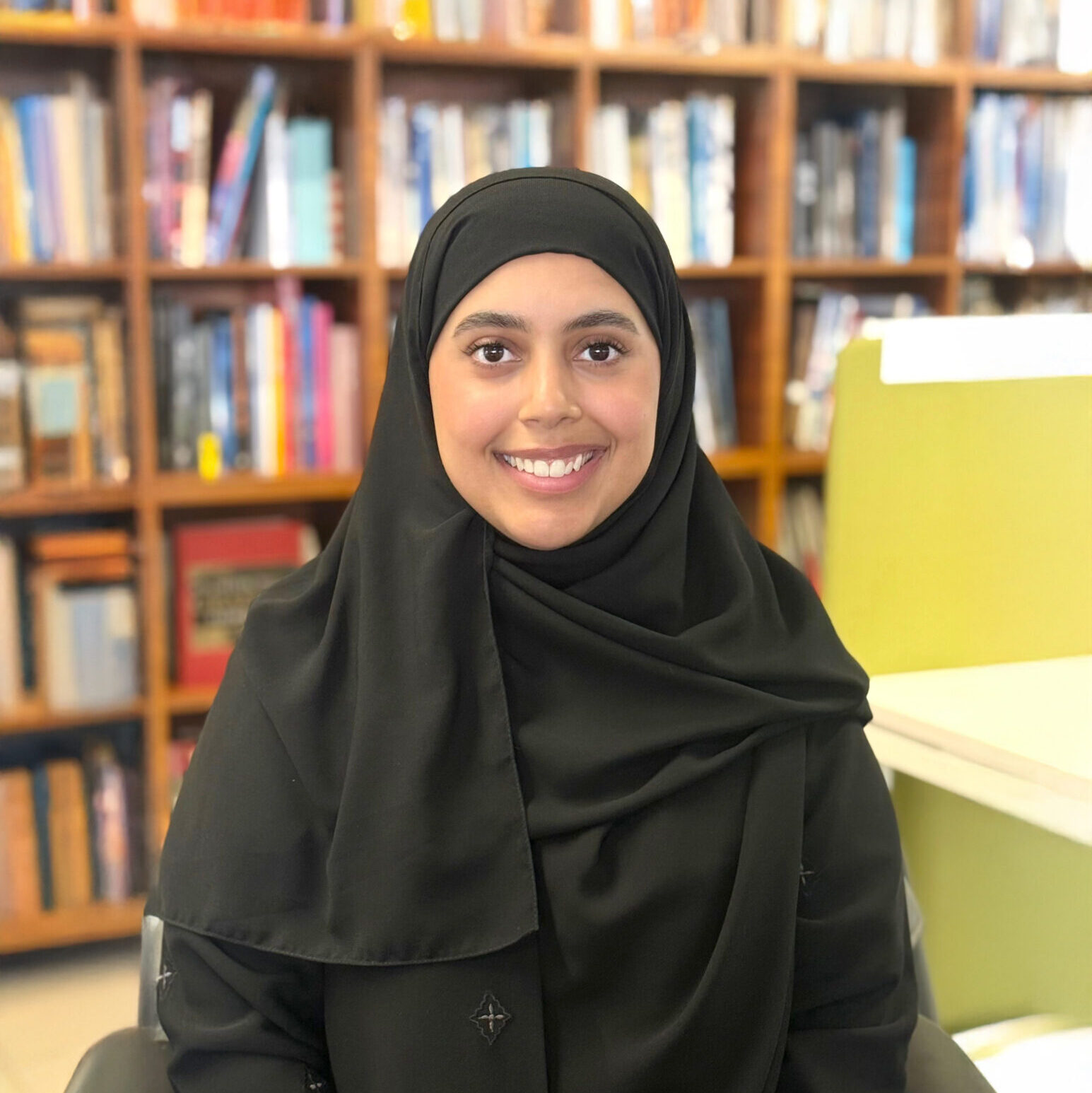






Vanessa El-Jammal is a Design Architect at Omrania in Riyadh, with experience across architectural design, multidisciplinary coordination, and technical delivery on large-scale mixed-use, hospitality, and giga-project developments in Saudi Arabia. Her background extends beyond traditional architectural practice into experiential design, photography, graphic design and music, bringing a broad creative perspective to her work. A graduate of Lebanese American University, she combines creative exploration with a strong focus on coordination, problem-solving, and the delivery of complex projects.
You’ve explored many creative disciplines alongside architecture. What keeps pulling you towards different forms of expression?
What keeps pulling me towards different forms of expression is the desire to create the desires of people and shape experiences. I love being creative; whether it is photography, music, drawing, or architecture, it gives me energy and peace of mind. Each art form comes with its own unique lens but stays similar as well. They’re all about expression, composition, emotion, and communication. I’ve always believed architects benefit from stepping outside of just architecture. Some of the most valuable lessons I’ve learned are from exploring multiple art forms, and trying to understand human psychology. What energizes me is being able to create experiences that people will remember. As architects, we’re constantly shaping experiences; the more we learn to understand sound, light, and human expression, the more meaningful our work becomes.
You spent several years coaching gymnastics. Does that experience still show up in the way you work today?
Absolutely. Looking back, I can see that my years in gymnastics shaped many of the professional habits that define how I work as an architect today, often in ways I never anticipated at the time.
The most significant influence is communication. As a gymnastics coach, I worked with everyone from very young children to adults, and each group required a completely different approach. Teaching a complex movement is not simply a matter of demonstrating it. You have to break it down into understandable steps, anticipate where someone might struggle, and find the right language to make an abstract concept feel achievable.
Architecture demands much of the same skill. Clients, operators, consultants, contractors, and end users rarely share the same technical vocabulary. My coaching experience taught me how to translate complexity into clarity. When presenting a design proposal or defending a critical decision, I instinctively return to that mindset. I dissect the idea, understand the reasoning behind every move, consider how each discipline is affected, and communicate the narrative in a way that allows others to follow the thinking process. In many ways, learning how to explain a difficult skill to a three-year-old was one of the best lessons in communication I could have received.
Gymnastics also instilled a level of precision that continues to influence my work every day. As an athlete, I became conditioned to notice the smallest details. In gymnastics, the difference between an exceptional performance and an average one can be measured in a slight misalignment, a bent leg, or a few degrees of deviation in body position. Over time, that attention to detail becomes second nature.
I find the same instinct carries into architecture. It allows me to spot inconsistencies that others might overlook, whether it is a line that is slightly off alignment, a dimension that does not fully reconcile, a coordination issue between disciplines, or even a simple spelling error buried within hundreds of drawing sheets. While these details may seem minor in isolation, they collectively determine the quality, credibility, and buildability of a project.
Perhaps the strongest connection between gymnastics and architecture is the pursuit of refinement. Neither discipline is ever truly about the first solution. Both require repetition, adjustment, evaluation, and continuous improvement. You learn to challenge your own work, revisit decisions, and search for a better outcome, even when something is already functioning adequately.
For me, gymnastics was never just a sport. It was an education in discipline, communication, precision, and accountability. Those lessons remain embedded in my design process today, influencing not only how I develop projects, but also how I lead teams, engage stakeholders, and pursue excellence throughout the lifecycle of a project
You’ve been involved in music, performance and visual design. Which of these has influenced your architectural thinking in the least obvious way?
Performance has influenced my architectural thinking in the least obvious way.
Music and visual design have fairly direct connections to architecture. We naturally think about rhythm, composition, light, materiality, and atmosphere. Performance, however, taught me something less tangible but far more valuable: how people experience a space moment by moment. Working on concerts and live events made me pay close attention to what an audience actually feels as they move through the space. Immersive experiences rely on the careful orchestration of multiple layers at once. Lighting, acoustics, visuals, movement, anticipation, and crowd dynamics all work together to create a lasting impression. If one element is disconnected, people notice it immediately, even if they can’t explain why.
That way of thinking has carried directly into my architectural work. When designing a building, I’m rarely focused solely on how it looks in photographs or on a plan. I’m more interested in how someone encounters it, moves through it, and remembers it. The question shifts from “Is this a beautiful space?” to “Is this a meaningful experience?”
Performance taught me that design should engage people emotionally and sensorially, not just functionally. The most successful projects are those that people continue to remember long after they’ve left, much like a memorable performance.
Ultimately, those experiences reinforced a simple belief that continues to guide my work: architecture should not merely accommodate life. It should create moments within it. A building succeeds when people do more than use it. It succeeds when they genuinely experience it.
When you start designing, where do you instinctively look for inspiration outside architecture?
When I begin a project, I often look at people.
My strongest source of inspiration comes from travel and from observing how different communities occupy space in their daily lives. I’m constantly paying attention to what makes a place memorable, not necessarily as a designer but as a visitor. Sometimes it’s a market street that feels naturally vibrant, a waterfront promenade that encourages people to linger, or a public square that seems to attract activity without effort.
I’m also interested in the relationship between culture and movement. How do people navigate a city? Where do they naturally gather? What routes become part of their routine? In my opinion, the answers reveal more about how a space should be designed than any formal architectural reference. Roads, pedestrian networks, bike paths, public transport connections, and even informal shortcuts tell a story about how people already interact with their environment.
I don’t like to focus heavily on what happens inside a building because I believe the user experience begins long before someone reaches the front door. The city, the landscape, and the daily rituals of its people all shape expectations. I find value in understanding those external conditions and carrying them into the architecture so the transition feels intuitive rather than imposed.
Travel has reinforced that belief. The projects that stand out to me are rarely the most visually striking. They’re the ones that feel deeply connected to their context and to the people who use them. They reflect local habits, local rhythms, and local culture in ways that are often subtle but meaningful.
As a result, my design process usually begins with observation rather than form-making. I’m interested in how people move, what they gravitate towards, where they pause, and what makes them feel comfortable or connected. Architecture, in my view, should not ask people to adapt to a building. It should build upon behaviors and patterns that already exist, transforming them into spaces that feel both familiar and enriching.
Have you ever brought an idea from another creative discipline into a project and been surprised by where it led?
Yes, I brought in an idea from music. One project that stands out was actually a university project from early in my studies. At the time, I was exploring the relationship between music and architecture.
What surprised me was where that line of thinking led. I initially approached the design through melody and rhythm, looking at how musical phrases build tension, pause, accelerate, and resolve. I expected it to influence the overall form, but it ended up shaping much deeper architectural decisions. The building developed a very organic movement, with spaces unfolding almost like a composition rather than following a conventional plan.
The most unexpected outcome was that it changed how I thought about environmental experience. Instead of relying on windows as the primary source of spatial character, I became interested in orchestrating light more intentionally, much like a composer controls moments of intensity and silence. The project also pushed me to think about acoustics from the very beginning, not as a technical layer added later, but as a fundamental part of how people would perceive and move through the building.
Although it was imperfect, it taught me an important lesson that has stayed with me throughout my career: inspiration from other creative disciplines is most valuable when it stops being literal. The goal is not to turn a building into a piece of music. The goal is to borrow the underlying principles, rhythm, sequence, contrast, anticipation, and apply them to the way people experience space. Today, when I’m designing a project, I often find myself thinking less about the building itself and more about the journey through it.
Looking across everything you create outside architecture, what does it reveal about the kind of architect you want to become?
Looking across the creative work I pursue outside architecture, I think it reveals a consistent motivation: I want to create things that leave an impression on people.
Whether it’s music, painting, photography, or architecture, I’m drawn to the same question: What makes someone feel something? What fulfills me is seeing a genuine human connection with the work, whether that’s a song, an image, or a space.
As an architect, I hope to carry that mindset throughout my career. I want to design places that people fall in love with the moment they enter. Not because they’re extravagant or visually overwhelming, but because they feel right. A home that brings a sense of comfort, an office that inspires people to do their best work, a hotel that creates a sense of anticipation, or a public space that naturally draws people together. Those emotional responses are what stay with us long after we’ve forgotten the technical details.
My experiences in music, photography, and visual arts have reinforced the idea that design is ultimately about perception and memory. People remember how a place made them feel. That’s a lesson I’ve carried into every architectural project I’ve worked on.
At the same time, architecture exists within realities that every architect understands. There are clients, budgets, timelines, operational requirements, and layers of decision-making. Also, early in your career, you’re often contributing to a vision rather than defining it yourself. I’ve come to see that not as a limitation, but as part of the journey. Learning how to balance ambition with constraints is a discipline in itself.
In conclusion, the architect I want to become is someone who never loses sight of the human experience behind the design. Someone who can work within practical constraints while still creating spaces that resonate emotionally.