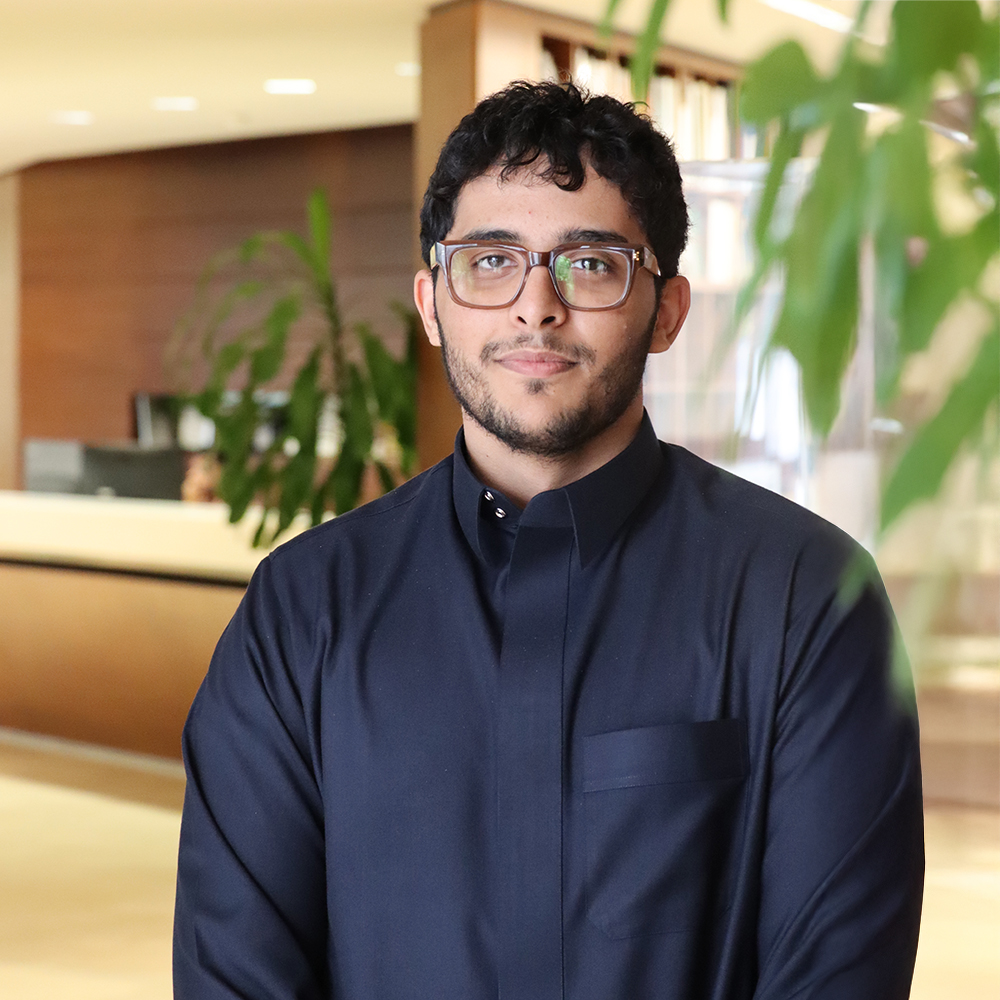






Mohamad Wazzan is a Design Manager and Senior Architect at Omrania with over 12 years of experience in architectural design and design management across housing, mixed-use, and large-scale urban developments in Saudi Arabia, the GCC, and Africa. Based in Riyadh, he focuses on delivering sustainable, code-compliant housing solutions through coordinated design processes that integrate master planning, BIM workflows, and urban design guidelines. His work involves leading multidisciplinary coordination to ensure that residential developments achieve a balance between density, livability, environmental performance, and constructability while maintaining coherence within broader urban frameworks.
When working on large housing developments, there are moments where one decision can affect thousands of lives. How do you approach that level of responsibility in your day-to-day work?
Working on large housing developments changes the way you think about design decisions because even small choices can affect thousands of residents over many years. I approach that responsibility by looking beyond the building itself and focusing on how people will actually experience the development daily, from privacy and circulation to accessibility and community interaction.
In practice, that means ensuring decisions are not taken in isolation. I spend a significant amount of time coordinating between architecture, structure, MEP, landscape, operations, and client expectations to avoid issues that can multiply across large-scale developments. Over time, I learned that responsibility at this scale is less about individual design gestures and more about creating reliable systems, strong coordination, and thoughtful environments that genuinely support how people live.
What keeps me grounded is remembering that these developments eventually stop being drawings and become neighborhoods, homes, routines, and communities. That perspective changes the level of care you bring into everyday decisions, even the small ones.
Can you recall a moment where a small design adjustment led to a meaningful improvement in how people might experience a space?
One example was during the development of villa typologies for a residential community in Saudi Arabia, where we reviewed the relationship between the entrance sequence and the kitchen location.
Some of the early layouts followed a more international planning approach with open visual connections between the entrance and kitchen. While efficient spatially, we realized the layouts did not fully align with local expectations around privacy and hospitality within Saudi family homes.
The adjustment itself was relatively small. We modified circulation paths and introduced visual separation between the entrance and family kitchen areas without affecting the overall efficiency of the villas. The result was a much more comfortable and culturally aligned living experience while still maintaining a contemporary architectural language.
That experience reinforced for me that meaningful improvements in residential design are often created through subtle spatial decisions rather than major architectural moves.
Coordination across disciplines often requires compromise. How do you decide what is worth holding on to, and what needs to be let go for the sake of the larger whole?
Coordination in large projects is rarely about protecting every design idea. It is about understanding which decisions are fundamental to the quality and integrity of the project, and which ones can adapt to support the larger objective.
Over time, I learned that not every compromise carries the same weight. I usually hold firmly on elements that directly affect user experience, spatial quality, safety, operational efficiency, or the long-term value of the development. Things such as circulation logic, privacy, accessibility, coordination integrity, or major architectural intent are difficult to recover later if compromised too early.
At the same time, large multidisciplinary projects require flexibility. There are moments where adjustments are necessary to accommodate structural efficiency, MEP requirements, cost constraints, authority comments, or delivery timelines. In those situations, I focus less on defending a specific solution and more on protecting the overall experience and intent behind it.
For example, during coordination on residential projects, we sometimes had to adjust layouts or façade elements due to structural or service constraints. Rather than approaching it as a conflict between disciplines, the discussion became about finding solutions that preserved the quality of the space while allowing the project to move forward realistically.
I think good coordination leadership comes from understanding that successful projects are not created by one discipline winning over another. They are created when teams align around the broader vision of the project and make decisions that strengthen the development as a whole.
In your experience, what is the most overlooked aspect of housing design that has the greatest impact once people actually move in?
In my experience, one of the most overlooked aspects of housing design is the transition between spaces and how people move through the home in their daily routines.
A lot of attention is usually placed on façades, amenities, unit counts, or major feature spaces, but the long-term living experience is often shaped by quieter design decisions such as privacy gradients, entrance sequences, storage integration, service circulation, natural light distribution, and the relationship between family and guest areas.
On residential projects in Saudi Arabia, especially, I found that cultural patterns of living have a major influence on how comfortable a home feels once occupied. A layout can look efficient on paper, but if the movement through the house feels exposed, if family spaces lack privacy, or if service functions interrupt daily life, residents feel it immediately.
One example is the positioning of kitchens and family living areas in villa typologies. Small adjustments in sightlines and circulation created a much stronger sense of comfort and functionality without changing the overall built-up area significantly.
I think the most impactful housing design decisions are often the ones residents stop noticing because the space simply works naturally with their lifestyle over time.
How has your understanding of livability evolved over time, particularly as projects become larger and more complex?
My understanding of livability has evolved from focusing mainly on the quality of individual buildings to understanding the quality of the overall daily experience people have within a development.
As projects become larger and more complex, you realize livability is shaped by how everything connects together, movement, privacy, shading, accessibility, public spaces, and even how residents transition from public areas into their homes.
For example, on large residential developments in Saudi Arabia, we spent significant time studying entrance sequences and the relationship between family spaces and guest areas within villa typologies. From a planning perspective, some layouts were efficient, but from a livability perspective, they did not fully align with local social patterns. Small adjustments in circulation and spatial layering created a much stronger sense of comfort and privacy for residents without major impact on the overall area efficiency.
That experience reinforced for me that livability is not only about aesthetics or density targets. It is about designing environments that feel natural to the people who will actually live in them every day
How do you anticipate Saudi Arabia’s architectural language evolving over the next decade, particularly as large-scale urban development continues to reshape its cities, and what kind of spatial identity do you hope emerging Saudi environments will ultimately be associated with?
I believe Saudi Arabia’s architectural language is moving toward a more confident and mature identity, one that is less dependent on imported design models and more focused on how people in the region actually live, interact, and experience space.
What is interesting today is that the discussion is no longer only about iconic buildings or rapid urban growth. There is a stronger focus on public realm quality, walkability, climate responsiveness, privacy, and human experience. I think future Saudi architecture will increasingly reinterpret traditional spatial principles such as shaded environments, layered privacy, courtyards, and transitional spaces, but through a contemporary lens rather than literal historical replication.
At the same time, Saudi cities are becoming more international, so the challenge is creating developments that feel globally relevant without becoming generic or placeless.
Personally, I hope emerging Saudi environments become known for being human-centered, climate-conscious, and culturally grounded. Developments that feel connected to the region socially and environmentally, while still reflecting the ambition and scale of the Kingdom’s transformation.