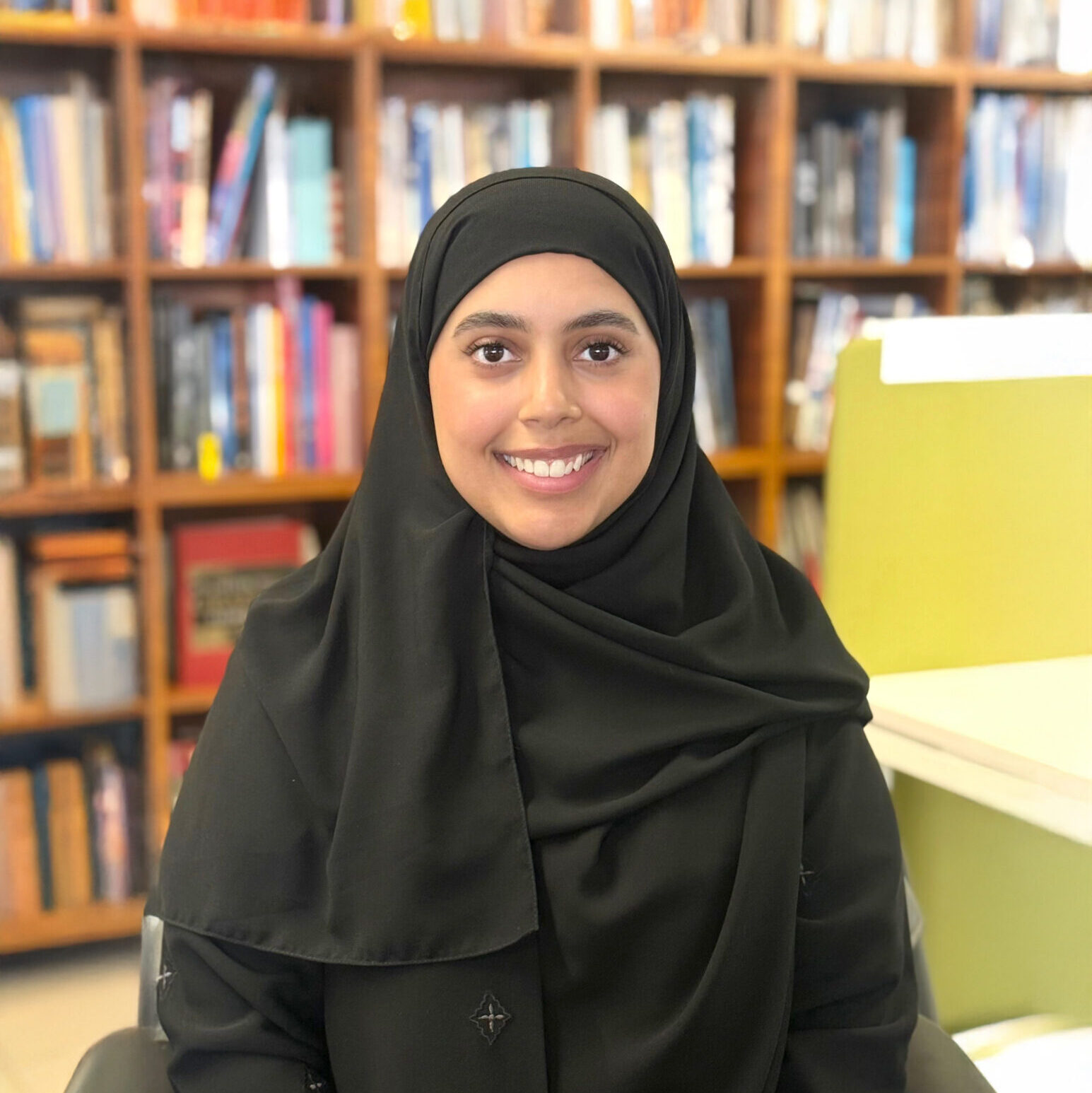






Anna Rita Petrungaro is Associate Interior Design Director at Omrania with more than 30 years of global experience in architecture, interior architecture, and set design. Her work spans luxury mixed-use developments, hospitality, residential, museums, and institutional projects across Europe, Asia, and the Middle East, where she brings together rigorous research, historical awareness, and a poetic sensibility for light, materiality, and spatial narrative. Drawing on her background in academia, sacred and urban space, and early years in cinema and theatre, she shapes interiors that feel deeply rooted in context yet quietly contemporary, contributing both conceptually and practically to Omrania’s role in advancing interior architecture across Saudi Arabia and the wider region
You’ve taught architectural history and theory at Oxford Brookes and other institutions. How would you describe the “mindset” you bring from the classroom into your current practice?
What I carry from the classroom into practice is, above all, a way of seeing before a way of doing – a disciplined attentiveness to what a building is trying to become, rather than an immediate impulse to impose form and collect mood images.
Teaching architectural history and theory – particularly through the lens of figures like Louis Kahn – instilled in me a deep respect for the silent intelligence of architecture. Kahn’s distinction between served and servant spaces is not, for me, merely a functional diagram; it is an ethical professional way to design. It asks us to give dignity to every part of a building, to understand that what supports life – the corridors, the shafts, the thresholds – is as meaningful as what is celebrated. In practice, this translates into a rigorous clarity of organization, where hierarchy is not imposed stylistically but revealed through necessity, light, and use.
The academic mindset also brings a certain patience – an acceptance that architecture is not resolved through speed, but through precision and care. In the classroom, one learns to question relentlessly: Why this space? Why this proportion? Why this sequence? I carry that same critical inquiry into the delivery of complex projects, ensuring that every decision – down to the smallest junction – contributes to a coherent whole.
At the same time, theory has taught me to pursue a kind of timelessness that resists trend. I am interested in buildings that speak, as Kahn would say, the language of silence, light, and permanence – spaces where material, structure, and light are composed with such clarity that they feel inevitable. This is particularly important in the Saudi context today, where the pace of development is extraordinary; the role of the architect is not only to deliver efficiently, but to anchor that momentum in spaces that endure culturally and emotionally.
To conclude, the mindset is one of synthesis: intellectual rigor paired with practical discipline. The same values I upheld in academia – clarity of thought, respect for typology, precision in execution, attention to details that respond to the whole, precision in the representation – are the ones I now apply in practice, ensuring that projects are not only delivered on time and within budget, but also carry a depth of meaning that outlasts their immediate function and submission.
Looking ahead, how do you see Saudi Arabia’s interior‑architecture culture evolving over the next decade, and what kind of spatial experience do you hope the country will be known for?
Looking ahead, Saudi Arabia’s interior architecture culture is poised to move from a phase of rapid demand expansion into one of deeper authorship – where identity, performance, and human experience converge with greater clarity and confidence.
Over the next decade, I see a shift away from imported typologies and stylistic replication toward a more grounded, contextually intelligent design language. This will not be a nostalgic return to heritage, but rather a sophisticated reinterpretation of it, where principles embedded in traditional vernacular Saudi environments, such as climatic responsiveness, material tactility, spatial hierarchy, and social gradation, are translated into contemporary settings. Interiors will become more narrative-driven, expressing not just function or brand, but a sense of place that is unmistakably rooted in the Kingdom.
At the same time, the culture of interior architecture will become more interdisciplinary. Interior Architects will increasingly operate at the intersection of architecture, urbanism (private & public realm), digital technology (smart system), and behavioral science. As Saudi Arabia continues to invest in sectors such as culture, tourism, and knowledge economies, interior spaces will be expected to do more than accommodate—they will need to perform, adapt, and engage. This will elevate the role of interiors from a finishing layer to a strategic component of development, influencing everything from user wellbeing to economic value and social interaction.
Equally important is the growing emphasis on human experience. As expectations around quality of life rise, interiors will be designed with greater sensitivity to comfort, inclusivity, and psychological resonance. This includes a stronger focus on natural light, acoustics, material authenticity, and biophilic integration, but also on more subtle dimensions—how space supports dignity, privacy, community, and cultural expression. In this sense, the success of interior architecture will be measured less by visual impact and more by how it makes people feel and behave over time.
What I hope Saudi Arabia will be known for is a distinct spatial experience that balances generosity with restraint—spaces that are calm yet rich, contemporary yet deeply rooted, and technologically advanced yet profoundly human. A spatial identity where hospitality is not just a function but a spatial ethos; where transitions between public and private realms are carefully choreographed; and where design reflects both the scale of national ambition and the intimacy of everyday life.
Ultimately, the ambition is not simply to create iconic interiors, but to cultivate a design culture that is thoughtful, enduring, and sustainable as a system – one that contributes meaningfully to the global environment and discourse while remaining authentic to its context
How has your definition of a “successful” interior changed since you first taught architecture versus now, when you are leading high‑profile projects across multiple cultures?
My understanding of what constitutes a “successful” interior has matured from a largely disciplinary definition into a more expansive, human-centered, and ethically grounded position.
Early in my academic career, a good design answer was framed through clarity of concept, spatial coherence, and understanding how to apply architectural language. I was, perhaps inevitably, guided by Vitruvius’ enduring triad – firmitas, utilitas, venustas – with a particular emphasis on venustas: the aesthetic and formal resolution of space. The architectural space was, in many ways, an intellectual artefact – something to be read, critiqued, and understood within the canon of architectural thinking.
Today, leading projects across multiple cultures, I find that definition both expanded and recalibrated. Vitruvius remains relevant as a valuable compass, but his principles are now interpreted through a more complex lens. Utilitas – the lived utility of space – has deepened to include not only function, but emotional resonance, behavioral patterns, wellbeing, inclusiveness, and cultural legibility. Venustas is no longer merely visual harmony, but an atmosphere – something felt, remembered, and even negotiated differently across contexts, and whether it fosters a sense of belonging. And firmitas, in contemporary terms, extends beyond physical durability to encompass adaptability, long-term relevance, and environmental responsibility as resource efficiency, adaptability over time, and responsiveness to climate.
A successful interior now is one that performs responsibly across scales of experience: it supports the rituals of everyday life, responds to climate/context and ecological footprint, while carrying meaning without imposing it. Sustainability is no longer an overlay – it is intrinsic to spatial quality. Likewise, inclusiveness is not an aspiration, but a fundamental criterion of design excellence. What makes the project relevant is the way it is translated into architectural decisions rather than decorative signals.
Leading projects across multiple cultures has also reinforced that success lies not in the imposition of a singular vision, but in the capacity of a space to translate – to absorb local narratives, to accommodate difference, and to enable participation. The most meaningful interiors today are those that are precise yet open-ended: carefully authored, yet generous enough to be reinterpreted over time.
In that sense, I have moved from valuing spatial experience as resolved compositions to understanding them as living, adaptive frameworks – spaces that evolve over time, shaped as much by their users as by their designers. That, to me, is where architectural success now resides, not in perfection, but in sustained relevance and human connection.
Finally, good interior design is measured not only by how they look, but by how they perform – environmentally, socially, and culturally – and by the extent to which they foster dignity, connection, and a shared sense of place.
Can you walk us through a project where a very “theoretical” concept, like typology, sacred space, or urban memory, became a concrete design move in the interior?
In one of our recent museum projects, the point of departure was not only the form, nor only the program, but an atmosphere – a condition of interiority. We began with “The Poetics of Space” by Gaston Bachelard, not as a reference to be illustrated, but as a conceptual framework to think through how space is felt, remembered, and inhabited.
Bachelard writes of the habitat space as a cosmos of intimate experiences – of corners, thresholds, nests, and shells. We translated this into the museum not through literal domestic metaphors, but through a sequence of spatial intensities. The curatorial narrative was structured as a journey from the collective to the deeply personal, and the interior architecture became the medium through which this transition was made legible.
At the urban scale, the museum presented itself as a porous, almost reticent object – inviting but not declarative. Upon entry, however, the visitor encountered a compressed threshold: a low, dimly lit vestibule that deliberately slowed the body and sharpened perception. This was our first “Bachelardian” move – the threshold as a psychological device, not merely a functional one.
From there, the spatial sequence unfolded as a series of nested volumes. Rather than a continuous open plan, we worked with gradations of enclosure – rooms within rooms, each calibrated in proportion, materiality, and light. Larger galleries were conceived as collective “salons,” while smaller chambers – almost like inner sanctums -held more intimate artefacts. These were not just display strategies; they were attempts to choreograph states of attention.
Materiality played a crucial role. We avoid placeless finishes in favor of tactile surfaces that could anchor memory – hand-finished plaster, 3D GRG surface, terrazzo with visible grain that registered time through imperfection. Light, too, was treated as a narrative agent: from diffused, ambient fields in the public zones to more focused, almost sacred shafts in the inner rooms. In certain moments, the object disappeared, and space itself became the exhibit.
Perhaps the most critical translation of theory into built form was our treatment of “corners,” which Bachelard describes as spaces of retreat and imagination. Instead of residual leftover spaces, we designed corners deliberately: small rooms within the space, seating areas, and quiet pockets where visitors could pause, withdraw, and internalize. These micro-spaces became some of the most powerful moments in the museum, precisely because they allowed for solitude within a collective experience. Working within the existing building by Zaha Hadid helps us achieve the quality we were looking for.
What began as a philosophical inquiry into the poetics of interiority ultimately informed very precise design decisions – sectional compression, material tactility, calibrated light, and spatial sequencing. The project reaffirmed that theory, when engaged with seriously, does not remain abstract; it becomes operative. It gives you a language to design not just for movement, but for memory, imagination, and emotional resonance.
In that sense, the Black Gold Museum was less about displaying objects and more about constructing an inner landscape – one that visitors do not simply pass through but carry with them.
Which ideas from architectural theory (spatial typology, ritual, monumentality, etc.) do you find yourself coming back to again and again in your interior‑architecture work?
I find myself returning, consistently, to the notion of atmosphere as articulated by Peter Zumthor- but not as an abstract or purely poetic idea. For me, it is something I learned long before I could name it, through lived experience.
I grew up in Palestrina, a city in Italy close to Rome, suspended along the edge of a mountain, where space is never neutral. There is a constant negotiation between land and horizon, between the solidity of terraced stone and the distant presence of the sea. Movement is defined by sequences – steps, thresholds, compressed passages that suddenly open to vast views. The materiality of the tufo and cement, the weight of retaining walls, the rhythm of climbing: these are not aesthetic choices, but spatial conditions that shape perception, memory, and behavior.
That experience has stayed with me as a kind of internal calibration. Zumthor’s proposition – that architecture is first perceived through a total sensory coherence – offers, in my experience, a powerful tool for alignment. When I speak to teams -particularly young Saudi designers – I often translate Zumthor’s thinking into something equally tangible: what is the sequence of experience we are constructing, and how does it hold together emotionally, functionally, and technically? What is the intended atmosphere, and how does it support the client’s operational, cultural, and commercial objectives? How are details connected to the whole? This anchors the team early, reducing ambiguity and, importantly, limiting unnecessary iterations later in the process.
In this sense, atmosphere is not indulgent—it is efficient. It allows us to make clearer decisions about material hierarchies, lighting strategies, spatial sequencing, and levels of finish. When these decisions are tied to a defined experiential outcome, they become easier to defend, easier to cost, and easier to deliver within constraints.
Other theoretical constructs – typology, ritual, monumentality – are equally instrumental, but again, they are deployed with precision. Typology provides a tested organizational logic, which helps us respond quickly to program requirements and benchmarking expectations. Ritual informs circulation and user flow, ensuring that spaces perform intuitively and reduce operational friction. Monumentality, when appropriate, is carefully calibrated to reinforce identity and value without compromising buildability or budget discipline.
In practice, this becomes a disciplined design tool. Defining atmosphere early allows us to align with the client’s needs – whether operational efficiency, brand identity, or cultural resonance – and to make precise decisions about layout, material systems, and lighting. It reduces ambiguity, supports cost control, and ultimately safeguards delivery timelines. Atmosphere, in this sense, is not indulgence; it is a framework for clarity.
What I find particularly compelling in the Saudi context is the parallel richness of lived atmospheres – majlis gatherings, shaded courtyards, layered thresholds between public and private. Much like Palestrina, these are environments where sequence, material, and climate quietly choreograph experience. Our role is to translate these qualities into contemporary interiors that meet ambitious briefs, while remaining buildable, cost-conscious, and responsive to the client.
To conclude, returning to Zumthor – and to my own early spatial memories – is a way of maintaining both sensitivity and discipline. It reminds the team that every design decision, however technical, contributes to a larger experiential continuity. And when that continuity is clear, we are able to deliver projects that are not only delivered within the timeline of a project and on budget, but also deeply grounded in how spaces are felt and remembered.
Looking at your interiors today, where do you see the fingerprints of your years in academia: in composition, material choices, lighting, or sequencing of spaces?
Looking at my interior design projects today, I recognize the imprint of academia not as a formal signature, but as a way of thinking. I believe all my previous answers to your interesting questions already give you my academic influence in the way I work and vice versa. I no longer see academia as something confined to institutions; I see it as a condition of awareness – where to live attentively is, in itself, a form of scholarship. For this reason, I can answer your question, including the concept of “academia of living”. So, these include that living in Italy shaped my way of designing interior spaces as well as my academic experience, where space is never singular, but accumulated. There, the identity of architecture emerges through layers: Roman substrata, Renaissance interventions, Baroque dramatic extravaganza, Modern intervention, and everyday adaptations. One learns that space is not designed once, but continuously rewritten. This has profoundly influenced how I conceive interior design work – as sequences of lived moments, where sequences of rooms, transitions, and proportions carry both memory and intent.
This sensibility is most evident in the sequencing of spaces. Movement is never incidental; it is constructed as a narrative of compression and release, light and shadow, intimacy and openness. Much like in Italian urban fabric, interiors unfold as a series of episodes, each with its own character, yet part of a larger spatial continuum. Academia trained me to read and compose these relationships with rigour – through typology, proportion, and the choreography of use.
Material choices follow a similar logic. I am drawn to materials that can absorb time – surfaces that weather, patina, and register human presence. This reflects a belief, rooted in both lived experience and academic inquiry, that materiality is not static but participates in the life of the space.
At the same time, this layered, almost archaeological understanding is disciplined by the enduring lesson of Le Corbusier and his notion of the house as “a machine for living in.” This idea remains critical – not as a reductive functionalism, but as a demand for clarity. Function, in this sense, is the invisible framework that ensures coherence: circulation must be intuitive, spaces must perform efficiently, and every element must justify its presence.
What interests me is the tension – and ultimately the synthesis – between these two positions. On one hand, the richness of historical layering and spatial memory; on the other, the precision and discipline of functional logic. Lighting becomes the mediator between them: it reveals depth, articulates material, and guides movement, while responding to very precise performance criteria.
So, the fingerprints of academia are not confined to composition, material, or lighting alone. They reside in a methodological balance: designing interior spaces that are at once layered and legible, experiential and efficient – where the poetic and the practical are not opposites but mutually reinforcing.